When a loved one is diagnosed with cancer, kidney failure, dementia, stroke, or any life-limiting illness, most Indian families focus only on treatment. Hospital visits, medicines, tests, insurance paperwork, and emotional stress become part of daily life.
But one important question often gets ignored:
“How can we improve the patient’s quality of life while managing the illness?”
This is where palliative care becomes important.
Many people in India still believe palliative care is only for the “last stage” of life. In reality, it is much broader. It focuses on reducing suffering, managing pain, supporting families emotionally, and helping patients live with dignity.
According to recent studies, nearly 7 to 10 million Indians need palliative care every year, yet less than 4% actually receive proper support.
For working families in India, this gap creates emotional burnout, financial pressure, and confusion during medical emergencies.
Understanding the 4 pillars of palliative care can help families make better healthcare decisions early — not just during critical situations.
Understanding Palliative Care in Simple Words
Palliative care is specialized medical support for people suffering from serious illnesses such as:
- Cancer
- Heart disease
- Kidney failure
- COPD and lung diseases
- Parkinson’s disease
- Dementia
- Stroke complications
- Advanced diabetes complications
The goal is not always to cure the disease. Instead, the focus is to:
- Reduce pain
- Improve comfort
- Support emotional health
- Help families manage stress
- Improve quality of life
Unlike common belief, palliative care can start alongside active treatment like chemotherapy, dialysis, or surgery.
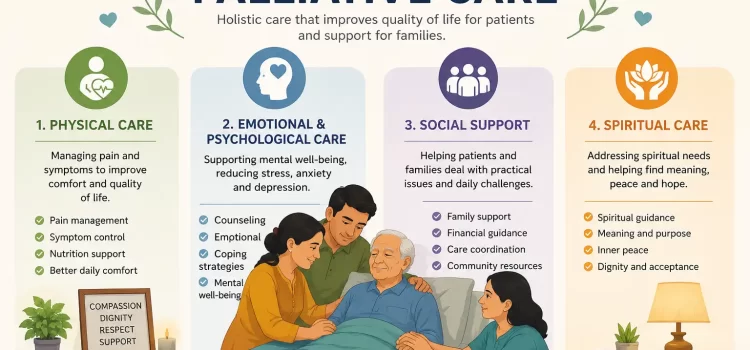
The 4 Pillars of Palliative Care
The foundation of effective palliative care rests on four major pillars:
- Physical Care
- Emotional & Psychological Care
- Social Support
- Spiritual Care
Let us understand each pillar in detail with real-life examples relevant to Indian families.
1. Physical Care – Managing Pain and Symptoms
The first and most visible pillar of palliative care is physical comfort.
Patients with chronic or terminal illnesses often suffer from:
- Severe pain
- Breathlessness
- Fatigue
- Nausea
- Sleep problems
- Loss of appetite
- Weakness
- Side effects of treatments
For many Indian families, managing these symptoms becomes exhausting.
A working son in Bengaluru may struggle between office responsibilities and taking his father for chemotherapy. A daughter in Kolkata may spend sleepless nights caring for her mother suffering from advanced arthritis and diabetes complications.
Palliative care specialists help reduce this burden through symptom management plans.
Example
A cancer patient undergoing chemotherapy may experience severe pain and vomiting. Instead of repeated emergency hospital visits, a palliative care team creates:
- Pain management schedules
- Nutrition guidance
- Home care support
- Sleep management strategies
- Medication adjustments
This improves daily comfort significantly.
Why This Matters in India
Healthcare inflation in India is rising rapidly. Many middle-class families spend heavily on repeated hospital admissions. Discussions online and healthcare reports show increasing concern around out-of-pocket healthcare expenses.
Good symptom management through palliative care often reduces:
- Emergency admissions
- ICU dependency
- Unnecessary procedures
- Travel stress
- Repeated hospitalization costs
This is especially important for salaried working families balancing finances and caregiving.
Case Study: How Early Physical Palliative Care Helped a Family
Ramesh, a 58-year-old school teacher from Pune, was diagnosed with stage 4 lung cancer.
Initially, his family focused only on aggressive treatment. Frequent hospital visits left his wife physically exhausted and his son emotionally stressed while managing a full-time IT job.
After consulting a palliative care specialist, the family introduced:
- Home-based pain management
- Oxygen support planning
- Nutrition counseling
- Fatigue management
Within weeks:
- Hospital visits reduced
- Pain levels improved
- The family regained emotional stability
- Ramesh could spend meaningful time at home
The illness did not disappear, but the quality of life improved dramatically.
That is the real purpose of palliative care.
 2. Emotional and Psychological Care – Supporting Mental Health
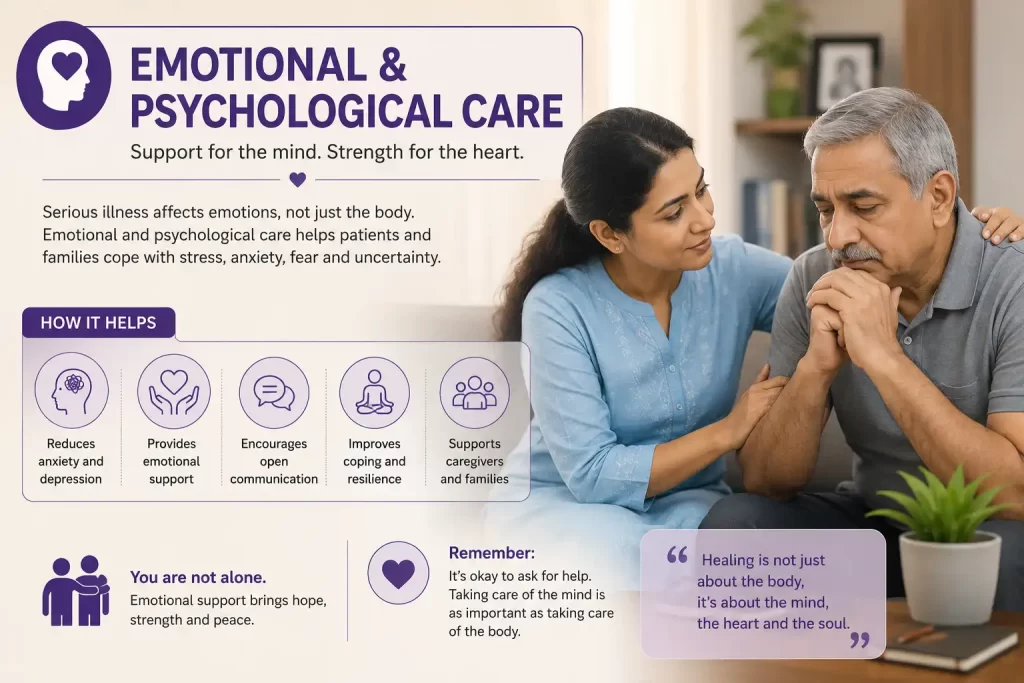
Serious illness affects not just the body but also the mind.
Patients often struggle with:
- Fear
- Anxiety
- Depression
- Loneliness
- Anger
- Fear of death
- Loss of independence
Family caregivers suffer too.
In Indian households, emotional exhaustion is often hidden behind “being strong.”
A working woman caring for her father with dementia may silently experience anxiety and burnout while balancing office work and caregiving.
This emotional pressure can impact:
- Productivity
- Relationships
- Sleep
- Mental health
- Financial decisions
Palliative care includes trained counselors, psychologists, and support teams who help patients and families process emotions in a healthier way.
Why Emotional Support Matters
Research increasingly shows that emotional care improves:
- Patient cooperation
- Treatment adherence
- Sleep quality
- Family relationships
- Caregiver resilience
Families who receive emotional support are often better prepared for difficult medical decisions.
The Indian Reality: Emotional Burnout Is Rising
India’s aging population and chronic disease burden are increasing rapidly. Studies estimate a growing need for supportive and palliative care among older adults.
At the same time:
- Nuclear families are becoming common
- Working professionals have limited caregiving time
- Healthcare costs are rising
- Caregiver stress is increasing
Without emotional support systems, families often feel isolated.
This is why the second pillar is just as important as medicines.
3. Social Support – Helping Families Navigate Real-Life Challenges
Illness affects the entire family ecosystem.
Social challenges may include:
- Financial stress
- Insurance confusion
- Job pressure
- Transportation problems
- Home caregiving arrangements
- Family disagreements
- Legal or documentation issues
Palliative care teams often include social workers who help families manage these practical issues.
Example
A patient undergoing long-term treatment may need:
- Wheelchair access at home
- Home nursing support
- Insurance coordination
- Medical equipment guidance
- Community support groups
Social support reduces confusion during emotionally stressful times.
Why Social Support Is Critical for Indian Working Families
In India, caregiving responsibilities usually fall on family members rather than institutional systems.
This creates challenges like:
- One earning member taking leave from work
- Children managing elderly care remotely
- Women balancing caregiving and careers
- Financial strain from long-term illness
According to recent reports, many Indians travel long distances just to access palliative care services. Some areas still have extremely limited access to care centers.
This lack of infrastructure increases pressure on families.
Social support within palliative care helps bridge this gap.
Case Study: Home-Based Support Changed Everything
Anita, a bank employee in Kolkata, cared for her mother suffering from advanced Parkinson’s disease.
Initially, the family faced:
- Frequent falls
- Emotional stress
- Sleep deprivation
- Financial anxiety
A palliative care team helped them with:
- Home modification suggestions
- Physiotherapy planning
- Caregiver counseling
- Local support resources
This reduced caregiver burnout and improved safety for the patient.
Sometimes families do not need more medicines. They need structured support.
4. Spiritual Care – Helping Patients Find Peace and Meaning
The fourth pillar is often misunderstood.
Spiritual care is not limited to religion.
It focuses on helping patients and families find:
- Meaning
- Peace
- Acceptance
- Emotional closure
- Hope
- Dignity
Patients facing serious illnesses often ask questions like:
- “Why is this happening to me?”
- “Will my family be okay?”
- “What happens next?”
Spiritual support may involve:
- Religious guidance
- Meditation
- Meaningful conversations
- Legacy building
- Emotional reconciliation
In India, spirituality plays a major role in healthcare journeys.
Families often feel emotionally stronger when spiritual care is integrated respectfully into treatment planning.
Why the 4 Pillars Matter More Than Ever in India
India is witnessing a sharp rise in chronic illnesses, cancer cases, and elderly healthcare needs.
Healthcare experts warn that palliative care access remains deeply inadequate despite growing demand.
For working families, this creates a dangerous cycle:
- Late intervention
- Financial exhaustion
- Emotional burnout
- Poor quality of life for patients
The 4 pillars of palliative care help families move from crisis management to compassionate care planning.
Common Myths About Palliative Care
Myth 1: Palliative care means giving up
False.
It works alongside treatment and focuses on comfort and quality of life.
Myth 2: Only cancer patients need palliative care
False.
It supports many chronic illnesses including heart disease, dementia, and kidney failure.
Myth 3: Palliative care is only for old people
False.
Even younger patients with serious illnesses can benefit.
Myth 4: It is only needed in the final days
False.
Early palliative care often improves outcomes significantly.
Final Thoughts
The real strength of palliative care lies in its human approach.
It treats the patient not just as a disease, but as a person with emotions, relationships, fears, and hopes.
The 4 pillars — physical, emotional, social, and spiritual care — work together to improve life for both patients and families.
For Indian working families dealing with long-term illness, patient care is no longer optional. It is becoming essential.
Because sometimes, the biggest healthcare need is not just adding years to life — but adding comfort, dignity, and peace to those years.